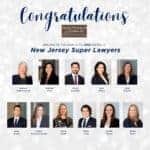


FOR IMMEDIATE RELEASE Karen Korr for Nukk-Freeman & Cerrakaren@fullkorrpress.com(619) 944-0650 (cell) Chris Siscocsisco@nfclegal.com(973) 507- 7638 (direct) SAN FRANCISCO (August 6, 2026): Employment law firm Nukk-Freeman
The Ninth Circuit and California courts recently issued a series of significant employment decisions addressing arbitration agreements, bonus calculations, and workplace investigations. Although the cases
On July 22, 2026, the U.S. Department of Labor’s Wage and Hour Division (WHD) issued two opinion letters offering timely insight into common wage-and-hour
As previously discussed, in January 2026, former Governor Phil Murphy signed A3451 (the “NJFLA Amendments”) into law, which amended the New Jersey Family Leave
Employers be warned: If you rely on artificial intelligence (“AI”) or automated systems in the workplace, you must ensure proper oversight. While recent technological advancements
UPDATE: On May 15, 2025, the U.S. District Court for the Northern District of Texas issued an order vacating portions of the U.S. Equal
UPDATE: On May 21, 2025, in State of Louisiana, et al. v. EEOC, U.S. District Judge David C. Joseph of the U.S. District Court
As we previously reported HERE, the New York City Council passed Int. No. 569-B in November 2023 requiring New York City’s Department of Consumer
On April 20, 2024, Governor Hochul signed into law the 2024-2025 State Budget, which includes three key changes for New York employers: In order
On April 23, 2024, the Federal Trade Commission (“FTC”) adopted a final rule prohibiting employers from entering non-competition agreements with workers after the rule’s

By Lindsey Andreozzi, Esq. This month brought significant changes for employment arbitration, as both Congress and the New Jersey Appellate Division took significant actions

by Arooj Siraj, Esq. The United States District Court for the District of New Jersey recently ruled that a plaintiff’s refusal to admit or

By Jean Schroll, Esq. On October 1, 2021, the New York State Division of Human Rights (the “Division”) announced that, for all complaints filed

By Kegan Andeskie, Esq. To say the least, the last year and a half has posed some unique challenges for litigators, but we have

By Kristine Ryan, Esq. The Uniform Services Employment and Reemployment Rights Act of 1994 (“USERRA”), one of several statutes benefitting veterans, prohibits civilian employers

By Kegan Andeskie, Esq. It is generally accepted that a plaintiff who files a lawsuit places his or her mental and physical health in

FOR IMMEDIATE RELEASE Media Contacts: Karen Korr for Nukk-Freeman & Cerra karen@fullkorrpress.com (619) 944-0650 (cell) Chris Sisco csisco@nfclegal.com (973) 507-7638 (direct) SAN DIEGO (September

FOR IMMEDIATE RELEASE Media Contacts: Karen Korrfor Nukk-Freeman & Cerrakaren@fullkorrpress.com(619) 944-0650 (cell) Chris Siscocsisco@nfclegal.com(973) 507- 7638 (direct) SAN DIEGO (March 25, 2025): Employment law
SIGN UP NOW to receive time sensitive employment law alerts and invitations to complimentary informational webinars and seminars.
"*" indicates required fields
By clicking this button and submitting information to us, you will be submitting certain personally identifiable information, or information which used together with other information, can be used to identify you and/or identify information about you, to Nukk-Freeman & Cerra, PC (“NFC”). Such information may be used by NFC to contact or identify you. Personally identifiable information may include, but is not limited to, your [name, phone number, address and/or] email address. We collect this information for the purpose of providing services, identifying and communicating with you, responding to your requests/inquiries, and improving our services. We may use your personally identifiable Information to contact you with time sensitive employment law e-alerts, marketing or promotional offers, invitations to complimentary and informational webinars and seminars, and other information that may be of interest to you. However, by providing any of the foregoing information to you, we are not creating an attorney-client relationship between you and NFC: nor are we providing legal advice to you. You may opt out of receiving any, or all, of these communications from us by following the unsubscribe link in any email we send. However, this will not unsubscribe you from receiving future communications from us which are based upon an independent request, relationship or act by you.