

One of the first considerations upon receiving an employee complaint is often whether to involve counsel in the investigation. A recent published decision from
The U.S. Immigration and Customs Enforcement (ICE) has raised the stakes for Form I-9 compliance. Under an updated Form I-9 Inspection fact sheet, employers now
The New York City Department of Consumer and Worker Protection (DCWP) adopted final rules to implement recent amendments to the New York City Earned

FOR IMMEDIATE RELEASE Karen Korr for Nukk-Freeman & Cerrakaren@fullkorrpress.com(619) 944-0650 (cell) Chris Siscocsisco@nfclegal.com(973) 507- 7638 (direct) SAN DIEGO (July 9, 2026): Employment law firm Nukk-Freeman

New York lawmakers closed out the 2026 legislative session with several significant workplace bills that turn up the heat on employers’ compliance to-do lists. Collectively,
In April 2023, the U.S. Department of Labor published a revised Family and Medical Leave Act (“FMLA”) poster, available HERE. Aside from the change in
Since October 2018, all employers of New York employees have been required, on at least an annual basis, to establish and distribute a workplace
As recently showcased during NFC’s webinar on this topic, currently, ELEVEN jurisdictions – California, Connecticut, Delaware, Illinois, Maine, New York, Chicago, New York City,
On March 22, 2023, the General Counsel of the National Labor Relations Board (NLRB) issued a guidance memorandum clarifying the NLRB’s position on a
New York employers should be aware that Governor Hochul has recently signed an amendment clarifying New York State’s new pay transparency law, which is
In February 2023, the federal Department of Labor (DOL) issued a new Field Assistance Bulletin providing guidance as to how the DOL will interpret

By Lindsey Andreozzi, Esq. This month brought significant changes for employment arbitration, as both Congress and the New Jersey Appellate Division took significant actions

by Arooj Siraj, Esq. The United States District Court for the District of New Jersey recently ruled that a plaintiff’s refusal to admit or

By Jean Schroll, Esq. On October 1, 2021, the New York State Division of Human Rights (the “Division”) announced that, for all complaints filed

By Kegan Andeskie, Esq. To say the least, the last year and a half has posed some unique challenges for litigators, but we have

By Kristine Ryan, Esq. The Uniform Services Employment and Reemployment Rights Act of 1994 (“USERRA”), one of several statutes benefitting veterans, prohibits civilian employers

By Kegan Andeskie, Esq. It is generally accepted that a plaintiff who files a lawsuit places his or her mental and physical health in
FOR IMMEDIATE RELEASE Media Contacts: Karen Korr for Nukk-Freeman & Cerra karen@fullkorrpress.com (619) 944-0650 (cell) Chris Sisco csisco@nfclegal.com (973) 507-7638 (direct) CHATHAM, NJ –
NFC is pleased to announce its inclusion in the 2025 edition of Best Law Firms®, published by Best Lawyers® with Metropolitan Tier 1 rankings
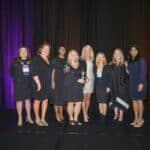
NEW YORK (September 23, 2024): Employment law firm Nukk-Freeman & Cerra, PC (NFC) was presented with the “MVP Award” from the National Association of

SAN DIEGO (August 29, 2024): Employment law firm Nukk-Freeman & Cerra, PC (NFC) is proud to welcome attorney Natalie P. Bryans to the firm’s
SIGN UP NOW to receive time sensitive employment law alerts and invitations to complimentary informational webinars and seminars.
"*" indicates required fields
By clicking this button and submitting information to us, you will be submitting certain personally identifiable information, or information which used together with other information, can be used to identify you and/or identify information about you, to Nukk-Freeman & Cerra, PC (“NFC”). Such information may be used by NFC to contact or identify you. Personally identifiable information may include, but is not limited to, your [name, phone number, address and/or] email address. We collect this information for the purpose of providing services, identifying and communicating with you, responding to your requests/inquiries, and improving our services. We may use your personally identifiable Information to contact you with time sensitive employment law e-alerts, marketing or promotional offers, invitations to complimentary and informational webinars and seminars, and other information that may be of interest to you. However, by providing any of the foregoing information to you, we are not creating an attorney-client relationship between you and NFC: nor are we providing legal advice to you. You may opt out of receiving any, or all, of these communications from us by following the unsubscribe link in any email we send. However, this will not unsubscribe you from receiving future communications from us which are based upon an independent request, relationship or act by you.